This story first appeared in DNA Money edition on Tuesday, December 18, 2012.
Singapore-based sovereign wealth fund Temasek will acquire 19.99% stake in Godrej Agrovet, a subsidiary of Godrej Industries, for Rs 572 crore.
The deal, which could well be the single largest alternative investment in the Indian FMCG space,values the company at Rs 2,860 crore.
Temasek will acquire the stake through a combination of primary and secondary market transactions, though Godrej did not give the exact size and other details of each of these, or of the investment firms looking to exit through this placement.
The primary component will be used to support Godrej Agrovet’s future expansion plans, the company said in a filing, without sharing details on the nature of the expansion it was planning.
A diversified agribusiness company with interests in animal feed, oil palm, agri-inputs and poultry, Godrej Agrovet had sales of Rs 2,460 crore last fiscal.
It has been a tremendous source of value creation for Godrej Industries, said Nadir Godrej, its chairman. “It continues to be on a strong revenue and profit trajectory while delivering excellent returns on capital employed.”
The company has over the past few years aggressively expanded its rural distribution, increased manufacturing capacities and launched cutting-edge technologies for farmers.
“Partnering with Temasek will further accelerate our performance,” said Balram Singh Yadav, managing director, Godrej Agrovet.
Incidentally, this is Temasek’s second investment in the Godrej group this year – the investment firm had in January bought 4.9% stake in Godrej Consumer for $135 million.
Tuesday, 18 December 2012


Cement firms set for strong show on demand revival
This story first appeared in DNA Money edition on Tuesday, December 18, 2012.
Indian cement companies are set for a strong revival, driven by visible bottoming out of the industry’s capacity utilisation in the current fiscal and lower-than-expected capacity additions in the next two.
Analysts said for the first time in five years, capacity addition in fiscal 2014 is expected to be lower than the incremental demand.
Reema Verma Bhasin and Amit Rathi, analysts with Bank of America Merrill Lynch, said in the next fiscal the industry’s effective capacity utilisation will be flat on a year-on-year (yoy) basis at 71%, but is likely to rise to a sharp 76% in fiscal 2015 as demand grows.
“Compared with our earlier expectations, overcapacity is a tad higher this fiscal, but capacity pipeline for the next fiscal is sharply lower. Installed capacity growth in the fiscal 2015 is now estimated at 4% yoy versus 8% growth expected earlier,” the analysts said in recent report, adding that general elections scheduled in the next 18 months, too, could boost cement demand.
Indicating a cyclical upturn for the sector by the second half of fiscal 2014, Deutsche Bank analysts said that rising capacity utilisations and emerging logistical constraints could impede supply.
As a result, industry is likely to be more localised and would benefit all the players, they said.
“Those with upcoming capacities and a bigger presence in tight demand supply regions (UltraTech and Shree), such as western and northern India in particular, could see disproportionate benefits,” said Chockalingam Narayanan, Manish Saxena and Abhishek Puri, analysts, Deutsche Bank, in a sector update.
Cement prices pan-India have declined 5% during July-December against a 7% price rise in the same period last year, largely due to the Competition Commission of India’s (CCI) order on alleged cartelisation in June 2012.
An industry source said most cement companies have a prices decline Rs 25-30 per 50-kg bag in the last 4-5 months.
“The stress on cement prices will continue in the balance part of the current fiscal as well. The category A companies will be hit significantly due to pricing pressure from category B and C companies,” he said.
Analysts,however, see an increase in cement majors’ operating profit 25-50% in fiscals 2014 and 2015.
Indian cement companies are set for a strong revival, driven by visible bottoming out of the industry’s capacity utilisation in the current fiscal and lower-than-expected capacity additions in the next two.
Analysts said for the first time in five years, capacity addition in fiscal 2014 is expected to be lower than the incremental demand.
Reema Verma Bhasin and Amit Rathi, analysts with Bank of America Merrill Lynch, said in the next fiscal the industry’s effective capacity utilisation will be flat on a year-on-year (yoy) basis at 71%, but is likely to rise to a sharp 76% in fiscal 2015 as demand grows.
“Compared with our earlier expectations, overcapacity is a tad higher this fiscal, but capacity pipeline for the next fiscal is sharply lower. Installed capacity growth in the fiscal 2015 is now estimated at 4% yoy versus 8% growth expected earlier,” the analysts said in recent report, adding that general elections scheduled in the next 18 months, too, could boost cement demand.
Indicating a cyclical upturn for the sector by the second half of fiscal 2014, Deutsche Bank analysts said that rising capacity utilisations and emerging logistical constraints could impede supply.
As a result, industry is likely to be more localised and would benefit all the players, they said.
“Those with upcoming capacities and a bigger presence in tight demand supply regions (UltraTech and Shree), such as western and northern India in particular, could see disproportionate benefits,” said Chockalingam Narayanan, Manish Saxena and Abhishek Puri, analysts, Deutsche Bank, in a sector update.
Cement prices pan-India have declined 5% during July-December against a 7% price rise in the same period last year, largely due to the Competition Commission of India’s (CCI) order on alleged cartelisation in June 2012.
An industry source said most cement companies have a prices decline Rs 25-30 per 50-kg bag in the last 4-5 months.
“The stress on cement prices will continue in the balance part of the current fiscal as well. The category A companies will be hit significantly due to pricing pressure from category B and C companies,” he said.
Analysts,however, see an increase in cement majors’ operating profit 25-50% in fiscals 2014 and 2015.
Holcim royalty won’t hit ACC, Ambuja much
This story first appeared in DNA Money edition on Tuesday, December 18, 2012.
Cement companies ACC and Ambuja may not face any major impact from the royalty payment to Swiss parent Holcim, with experts saying it would affect their profitability marginally.
Putting all speculations to end, the Boards of ACC and Ambuja have confirmed the payouts to Holcim with effect from January 1, 2013, to be presented to shareholders for consideration at the next annual general meetings.
The companies would shell out 1% of their net annual sales to Holcim as technology and know-how fees (read royalty). Experts, however, said the impact on profits would be well under 2%.
The announcement removes the overhang on both the stocks as investors have been awaiting clarity on the issue, they said.
Rajesh Kumar Ravi, analyst, Karvy Stock Broking, said the development will have a marginal impact on the profitability of both the companies if they are not able to pass on this cost.
“The increased royalty should increase cash outflow by 0.4-0.5% of net annual sales. This should lower ACC’s estimated calendar year 2013 earnings before interest, taxes, depreciation and amortisation (Ebitda) by 2% and profit after tax by 2.5%. Ambuja’s calender 2013 Ebitda and net profit would be lower by around 1.6%, if not completely passed through,” Ravi said.
For the first half ended September 30, ACC and Ambuja registered net annual sales of Rs5,638 crore and Rs5,199 crore, respectively.
Assuming the same figures for calendar 2013, the 1% technology and know-how fees for both companies works out to Rs 56.4 crore and Rs 52 crore, respectively.
A Morgan Stanley report in June had said that ACC and Ambuja were already paying 0.6-0.7% of net revenues to Holcim towards a few services such as training and technical consultancy.
Starting January, this expenditure will increase to 1% of net sales.
Raashi Chopra, analyst, Citi Research, said the proposed royalty is intended to bring the Indian subsidiaries more in line with the group practice and replace some of these payments.
“Thus, the negative effect of the royalty would be partly offset,” said Chopra in a recent report.
Though there was some confusion whether 1% was over and above the existing outflow, an ACC spokesperson confirmed that the technology and know-how fees is not over and above the existing expenditure being incurred by the company and will be inclusive.
“This, however, is lower than the level of 2% being indicated by various reports earlier,” said Ashish Jain, analyst with Morgan Stanley Research, in a recent report.
Cement companies ACC and Ambuja may not face any major impact from the royalty payment to Swiss parent Holcim, with experts saying it would affect their profitability marginally.
Putting all speculations to end, the Boards of ACC and Ambuja have confirmed the payouts to Holcim with effect from January 1, 2013, to be presented to shareholders for consideration at the next annual general meetings.
The companies would shell out 1% of their net annual sales to Holcim as technology and know-how fees (read royalty). Experts, however, said the impact on profits would be well under 2%.
The announcement removes the overhang on both the stocks as investors have been awaiting clarity on the issue, they said.
Rajesh Kumar Ravi, analyst, Karvy Stock Broking, said the development will have a marginal impact on the profitability of both the companies if they are not able to pass on this cost.
“The increased royalty should increase cash outflow by 0.4-0.5% of net annual sales. This should lower ACC’s estimated calendar year 2013 earnings before interest, taxes, depreciation and amortisation (Ebitda) by 2% and profit after tax by 2.5%. Ambuja’s calender 2013 Ebitda and net profit would be lower by around 1.6%, if not completely passed through,” Ravi said.
For the first half ended September 30, ACC and Ambuja registered net annual sales of Rs5,638 crore and Rs5,199 crore, respectively.
Assuming the same figures for calendar 2013, the 1% technology and know-how fees for both companies works out to Rs 56.4 crore and Rs 52 crore, respectively.
A Morgan Stanley report in June had said that ACC and Ambuja were already paying 0.6-0.7% of net revenues to Holcim towards a few services such as training and technical consultancy.
Starting January, this expenditure will increase to 1% of net sales.
Raashi Chopra, analyst, Citi Research, said the proposed royalty is intended to bring the Indian subsidiaries more in line with the group practice and replace some of these payments.
“Thus, the negative effect of the royalty would be partly offset,” said Chopra in a recent report.
Though there was some confusion whether 1% was over and above the existing outflow, an ACC spokesperson confirmed that the technology and know-how fees is not over and above the existing expenditure being incurred by the company and will be inclusive.
“This, however, is lower than the level of 2% being indicated by various reports earlier,” said Ashish Jain, analyst with Morgan Stanley Research, in a recent report.
Go Native's Guy Nixon exploring brand extension in India
 |
| Guy Nixon |
Go Native, the London-headquartered serviced apartment operator, is looking at expanding its brand in the Indian market to cash in on the growing demand for long-stay accommodation from its clientele in Europe, Middle East and India.
Guy Nixon, founder and CEO, Go Native, who was recently in India for client meeting, said, “We would love to explore opportunities to expand out brand in India. We would be keen to meet property owners who would like to work with the Go Native franchise.”
The company has a network of 25,000 serviced apartments, a large part of which is branded and operated by Go Native in London and Edinburgh. It also works with operators across the UK, Europe and the Middle East catering to clients’ need for housing in these regions.
Elaborating the company’s business model, Nixon said most of properties in the network are on 10-15 year management contract. “We brand and furnish the buildings and run them a bit like hotels but they are all apartments,” he said.
On the Indian market, he said, “We have been housing Indian people in the UK for over 10 years now. We have learnt a lot about the Indian market in that timeframe and have good understanding of their needs for housing. Their primary requirements are good quality accommodation, value for money, sensible pricing, good transport connectivity, preference to live within a community and close proximity to the workplace,” he said.
Go Native operates three-, four-, and five-star buildings and pricing depends on how long people are staying. In comparison to hotels, the rates at fully equipped serviced apartments are 20-30% cheaper while offering a lot more space.
While the duration of stay varies from company to company, Indian business travellers generally use Go Native apartments from 7-14 nights on the lower side going up to 1-6 months or more when coming on knowledge transfer and long-term projects.
“Banking industry forms large part of clientele from Mumbai while it is technology sector from Bangalore, Hyderabad and Chennai. It is a fairly mixed one in terms of companies from New Delhi,” said Nixon.
Anil Ambani with China's Dalian Wanda Group to make realty foray
An edited version of this story first appeared in DNA Money edition on Friday, December 14, 2012.
Anil Ambani promoted Reliance Group is foraying into the Indian real estate sector. The diversified Indian business house has partnered with one of China's largest multi-billion dollar enterprises Dalian Wanda Group to set up a joint venture (JV) that will undertake real estate developments in the country. Financial details pertaining to the JV were not disclosed. The two groups are likely to also explore synergies in the film exhibition business (through Reliance MediaWorks Ltd) as the Chinese entity is among the leading multiplex players in the world with over 6,000 screens.
Anil D Ambani, chairman, Reliance Group, said that the Reliance Group has become the single largest trading partner between India and China over the past few years. "We have built strong relationships with a large number of leading corporates, and major financial institutions and banks in China. We are now looking forward to extend our strategic partnership to the highly successful and dynamic Wanda Group, in a manner that will tremendously benefit both groups, and unlock substantial value for millions of all our stakeholders,” Ambani said in a media statement.
The Reliance-Wanda JV is the fourth such association between an Indian company and an international real estate development firm. Earlier in 2004, Puravankara Projects Ltd had collaborated with Singapore's Keppel Land Ltd for a 49:51 JV to develop integrated townships across India. Following suit was another partnership in 2005 between ICICI Ventures and US real estate development company Tishman Speyer Properties for realty projects in the country. Thereafter in 2007, India's largest realtor DLF Ltd formed a joint venture with a privately owned international real estate firm Hines to develop a major office tower in Gurgaon.
Industry experts said that the Reliance-Wanda is certainly a unique and positive development for the Indian real estate industry. "This comes at a time when majority of the global economies excluding Europe are on a recovery path. Indian economy is also likely to recover within the next couple of years. Keeping this scenario in mind, the joint venture is an exciting development for the real estate industry," said a top official with a international property consulting firm.
As for the nature of developments to be undertaken by the proposed JV is concerned, Reliance Group said in the media statement, "It will be to develop integrated township projects in India, including but not limited to commercial buildings and residential condos / apartments, hotels, retail space, etc."
To start with, the JV will develop the land parcel owned by Reliance Communications Ltd (The Dhirubhai Ambani Knowledge City complex in Navi Mumbai spread across approximately 135 acres) having the potential for development of over 10 million sq ft, subject to necessary approvals. Similarly, another 10 million sq ft will be developed area in a phased manner on 80 acres owned by Reliance Infrastructure Ltd in Hyderabad. The said land parcel has unlimited floor space index (FSI) for development for commercial and residential purposes, hotels, etc.
Wang Jianlin, chairman, Wanda Group said that India is a rapidly developing economy and huge market potential. "Wanda is very excited about the opportunities in the Indian market. By joining our strengths together, we hope our cooperation will bring mutual benefits and great results,” said Jianlin.
Among leading real estate developers in the world, the Wanda Group has built over 130 million square feet in 66 integrated projects across 50 cities in China. Going by the scale, Reliance Group is primarily banking on the expertise and demonstrated track record of the Wanda Group to execute its realty developments in India.
Anil Ambani promoted Reliance Group is foraying into the Indian real estate sector. The diversified Indian business house has partnered with one of China's largest multi-billion dollar enterprises Dalian Wanda Group to set up a joint venture (JV) that will undertake real estate developments in the country. Financial details pertaining to the JV were not disclosed. The two groups are likely to also explore synergies in the film exhibition business (through Reliance MediaWorks Ltd) as the Chinese entity is among the leading multiplex players in the world with over 6,000 screens.
Anil D Ambani, chairman, Reliance Group, said that the Reliance Group has become the single largest trading partner between India and China over the past few years. "We have built strong relationships with a large number of leading corporates, and major financial institutions and banks in China. We are now looking forward to extend our strategic partnership to the highly successful and dynamic Wanda Group, in a manner that will tremendously benefit both groups, and unlock substantial value for millions of all our stakeholders,” Ambani said in a media statement.
The Reliance-Wanda JV is the fourth such association between an Indian company and an international real estate development firm. Earlier in 2004, Puravankara Projects Ltd had collaborated with Singapore's Keppel Land Ltd for a 49:51 JV to develop integrated townships across India. Following suit was another partnership in 2005 between ICICI Ventures and US real estate development company Tishman Speyer Properties for realty projects in the country. Thereafter in 2007, India's largest realtor DLF Ltd formed a joint venture with a privately owned international real estate firm Hines to develop a major office tower in Gurgaon.
Industry experts said that the Reliance-Wanda is certainly a unique and positive development for the Indian real estate industry. "This comes at a time when majority of the global economies excluding Europe are on a recovery path. Indian economy is also likely to recover within the next couple of years. Keeping this scenario in mind, the joint venture is an exciting development for the real estate industry," said a top official with a international property consulting firm.
As for the nature of developments to be undertaken by the proposed JV is concerned, Reliance Group said in the media statement, "It will be to develop integrated township projects in India, including but not limited to commercial buildings and residential condos / apartments, hotels, retail space, etc."
To start with, the JV will develop the land parcel owned by Reliance Communications Ltd (The Dhirubhai Ambani Knowledge City complex in Navi Mumbai spread across approximately 135 acres) having the potential for development of over 10 million sq ft, subject to necessary approvals. Similarly, another 10 million sq ft will be developed area in a phased manner on 80 acres owned by Reliance Infrastructure Ltd in Hyderabad. The said land parcel has unlimited floor space index (FSI) for development for commercial and residential purposes, hotels, etc.
Wang Jianlin, chairman, Wanda Group said that India is a rapidly developing economy and huge market potential. "Wanda is very excited about the opportunities in the Indian market. By joining our strengths together, we hope our cooperation will bring mutual benefits and great results,” said Jianlin.
Among leading real estate developers in the world, the Wanda Group has built over 130 million square feet in 66 integrated projects across 50 cities in China. Going by the scale, Reliance Group is primarily banking on the expertise and demonstrated track record of the Wanda Group to execute its realty developments in India.
Jiggs Kalra dishes out a new restaurant venture with Mirah Hospitality
This story first appeared in DNA Money edition on Thursday, December 13, 2012.
Five years after creating ripples with restaurant chain Punjab Grill, celebrity chef Jiggs Kalra along with son Zorawar has now collaborated with Mirah Group for a new venture.
The new entity, Massive Restaurants Pvt Ltd, will set up a chain of fine-dining, smart casual dining and luxury mithai (Indian sweets) outlets across the country, which would be expanded to select international markets after a year.
Gaurav Goenka, director, Mirah Group, told DNA that Massive Restaurants is a joint venture with Mirah Hospitality, in which the Kalras hold a majority stake.
“The food and beverage (F&B) concepts will be created by the Kalras and Mirah will leverage on its experience in the real estate and operational matters,” said Goenka, adding that within three years the JV will be India’s largest restaurant chain operator.
The fine-dine restaurant will operate under Masala Library by Jiggs Kalra brand, while it will be Made in Punjab for the smart casual restaurant chain.
The luxury / premium mithai chain will be operated as Mithai by Jiggs Kalra. All the brands and trademarks will be held under the new venture.
Jiggs Kalra, partner, Massive Restaurants, said the venture will endeavour to provide patrons to experience a culinary journey while capturing the grandeur of centuries-old traditions and the long-lost essence of one of the oldest known culinary traditions in the world.
“The fine-dining restaurant will recreate the erstwhile culinary traditions to offer a truly gastronomical adventure for connoisseurs of fine cuisine,” he said.
The JV has set a target of 11-12 outlets (between the three brands) in the next 12-16 months.
While initial investment is pegged at around Rs25 crore, the overall capital expenditure in the coming years is envisaged at about Rs40 crore, which would be funded internally.
Zorawar Kalra, partner, Massive Restaurants, said two fine-dining, four smart casual restaurants and five mithai stores were targeted to be set up for the next fiscal.
The first fine-dine restaurant is expected by April at Bandra-Kurla Complex in Mumbai.
“These would ideally come up in the Mumbai and Delhi and eventually be opened in the other top 8-10 cities, including Bangalore, Kolkata and Chennai. With a seating capacity of 90-100, the fine-dine restaurants will be spread across 3,500-4,000 sq ft, while it will be 115 seats across 3,500 sq ft for smart casual restaurants. The mithai outlets will range 300-1,500 sq ft,” he said.
Five years after creating ripples with restaurant chain Punjab Grill, celebrity chef Jiggs Kalra along with son Zorawar has now collaborated with Mirah Group for a new venture.
The new entity, Massive Restaurants Pvt Ltd, will set up a chain of fine-dining, smart casual dining and luxury mithai (Indian sweets) outlets across the country, which would be expanded to select international markets after a year.
Gaurav Goenka, director, Mirah Group, told DNA that Massive Restaurants is a joint venture with Mirah Hospitality, in which the Kalras hold a majority stake.
“The food and beverage (F&B) concepts will be created by the Kalras and Mirah will leverage on its experience in the real estate and operational matters,” said Goenka, adding that within three years the JV will be India’s largest restaurant chain operator.
The fine-dine restaurant will operate under Masala Library by Jiggs Kalra brand, while it will be Made in Punjab for the smart casual restaurant chain.
The luxury / premium mithai chain will be operated as Mithai by Jiggs Kalra. All the brands and trademarks will be held under the new venture.
Jiggs Kalra, partner, Massive Restaurants, said the venture will endeavour to provide patrons to experience a culinary journey while capturing the grandeur of centuries-old traditions and the long-lost essence of one of the oldest known culinary traditions in the world.
“The fine-dining restaurant will recreate the erstwhile culinary traditions to offer a truly gastronomical adventure for connoisseurs of fine cuisine,” he said.
The JV has set a target of 11-12 outlets (between the three brands) in the next 12-16 months.
While initial investment is pegged at around Rs25 crore, the overall capital expenditure in the coming years is envisaged at about Rs40 crore, which would be funded internally.
Zorawar Kalra, partner, Massive Restaurants, said two fine-dining, four smart casual restaurants and five mithai stores were targeted to be set up for the next fiscal.
The first fine-dine restaurant is expected by April at Bandra-Kurla Complex in Mumbai.
“These would ideally come up in the Mumbai and Delhi and eventually be opened in the other top 8-10 cities, including Bangalore, Kolkata and Chennai. With a seating capacity of 90-100, the fine-dine restaurants will be spread across 3,500-4,000 sq ft, while it will be 115 seats across 3,500 sq ft for smart casual restaurants. The mithai outlets will range 300-1,500 sq ft,” he said.
Sunday, 9 December 2012
When something becomes a formula, you've to move on: Piyush Pandey
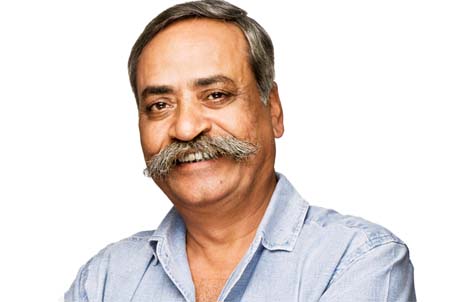 |
| Piyush Pandey |
This Q&A first appeared in DNA Money edition on Thursday, December 6, 2012.
Piyush Pandey, executive chairman and creative director, South Asia, Ogilvy India, does not believe in doing the most popular thing in the market. He would rather try and create something that can be very popular and needs deeper thinking. For instance, item numbers have been very successful, but will he do one? “No. I’d rather find something else which is better, otherwise it becomes a formula and I don’t believe in formulas,” he said. Edited excerpts...
What are the three things that make Ogilvy click so well?
I’d say belief, respect for the consumer and respect for our clients’ needs have worked for us and the end result is out there for everyone to see.
You are an acute observer of people and trends. How do you absorb the nuances of life – the panorama of emotions, attitudes, quirks et al?
It’s a 24 x 7 job of observing and understanding people, seeing the changes they are going through. It’s not a research but observation of human life. Respect the surroundings and do not tell yourself that you know it all. You have to keep learning.
You have been at the fulcrum of advertising for more than three decades. Where does creativity go from here? How different are the creative guys of today from the earlier ones?
I don’t think creativity will ever change. The expressions may change, media may change, we may move from conventional media to new media, but the one who will succeed will be the one who will be more creative in doing it. This is because the new media will be available to everybody, but only the most creative will stand out. That’s the way I see life, which is ever changing and one has to keep pace with it. Values will never change and you’ll have to live with them. Certain expressions will change and you’ll have to learn them.
If medium is the message, how do you see the new platforms panning out in India?
I think all media will live together. I have always believed that in the next 10 years, conventional media is not going to get out of fashion, but new media will come in. Everyone has to be prepared to accept the change and yet not forget that we are not the best. Even the best has not changed that much. I mean, the talk about new media is a bit over-hyped to my mind. You have to keep pace with it. There is a new India which is lapping up the conventional media and you will have to keep a sense of balance between the two.
What’s the one accolade you are yearning for?
The only accolade that I really yearn for every day is that when I go to my barber shop, my barber tells me I saw your advertisement and I loved it. That personal connect is much more to me than anything else. On Tuesday night, there were 50 students who met me and said I loved your work. Now, they didn’t give me an award, but I think it was a bigger award than anything else that we got on the awards night.
At the end of the day, we are commercial artists and not artist artists. Otherwise, I would be happy painting things in my house while nobody else would be interested in them. I am paid to reach out to people and when people react to the work that we do, it is the greatest accolade and nothing can get any bigger than that.
Piyush Pandey, executive chairman and creative director, South Asia, Ogilvy India, does not believe in doing the most popular thing in the market. He would rather try and create something that can be very popular and needs deeper thinking. For instance, item numbers have been very successful, but will he do one? “No. I’d rather find something else which is better, otherwise it becomes a formula and I don’t believe in formulas,” he said. Edited excerpts...
What are the three things that make Ogilvy click so well?
I’d say belief, respect for the consumer and respect for our clients’ needs have worked for us and the end result is out there for everyone to see.
You are an acute observer of people and trends. How do you absorb the nuances of life – the panorama of emotions, attitudes, quirks et al?
It’s a 24 x 7 job of observing and understanding people, seeing the changes they are going through. It’s not a research but observation of human life. Respect the surroundings and do not tell yourself that you know it all. You have to keep learning.
You have been at the fulcrum of advertising for more than three decades. Where does creativity go from here? How different are the creative guys of today from the earlier ones?
I don’t think creativity will ever change. The expressions may change, media may change, we may move from conventional media to new media, but the one who will succeed will be the one who will be more creative in doing it. This is because the new media will be available to everybody, but only the most creative will stand out. That’s the way I see life, which is ever changing and one has to keep pace with it. Values will never change and you’ll have to live with them. Certain expressions will change and you’ll have to learn them.
If medium is the message, how do you see the new platforms panning out in India?
I think all media will live together. I have always believed that in the next 10 years, conventional media is not going to get out of fashion, but new media will come in. Everyone has to be prepared to accept the change and yet not forget that we are not the best. Even the best has not changed that much. I mean, the talk about new media is a bit over-hyped to my mind. You have to keep pace with it. There is a new India which is lapping up the conventional media and you will have to keep a sense of balance between the two.
What’s the one accolade you are yearning for?
The only accolade that I really yearn for every day is that when I go to my barber shop, my barber tells me I saw your advertisement and I loved it. That personal connect is much more to me than anything else. On Tuesday night, there were 50 students who met me and said I loved your work. Now, they didn’t give me an award, but I think it was a bigger award than anything else that we got on the awards night.
At the end of the day, we are commercial artists and not artist artists. Otherwise, I would be happy painting things in my house while nobody else would be interested in them. I am paid to reach out to people and when people react to the work that we do, it is the greatest accolade and nothing can get any bigger than that.
After Mumbai, Vikas Oberoi looks at the National Capital Region
 |
| Vikas Oberoi |
Oberoi Realty, the predominantly Mumbai-based developer, plans to enter the Delhi market within a year, joining other city-based realtors such as Tata Housing and Godrej Properties that have recently come up with projects in and around the national capital.
While Oberoi would enter the National Capital Region (NCR) in a year, the company also intends to expand into southern India at a later stage.
Vikas Oberoi, chairman and managing director, said, "Now that we know how to do multiple sites in the same city, we want to look at multiple cities. Markets like Delhi, NCR, Gurgaon and NOIDA will be looked at to start with."
Delhi with its simplified and well laid-out land acquisition processes also has a lot of established developers, he said. "We will soon set up a team and get going with developments there. It's a work in progress for now. Something concrete should happen in the next 12 months." said Oberoi.
While entering other states, he said the company will look for partnerships and initially take up small projects. "We want to set our company for the next 100 years," said Oberoi.
On expansion in other markets, Oberoi said, "In the outer circuit we have kept Hyderabad and Bangalore, but have not gone beyond a particular point in exploring those possibilities. We want to first do Delhi and will see how it works in the next 2-3 years."
On the company's serviced residences and residential development in Worli, Mumbai, Oberoi said the project is in the fairly advanced stage of being launched and details will be made public within the next couple of months.
While the market is abuzz about Mandarin Oriental being signed as the hospitality partner for the serviced residences, Oberoi did not disclose any deal.
With cash reserves of about Rs 1,111 crore, Oberoi has no plans for any fundraising in the future. But the company will have to go for an offer for sale to reduce stake in the company to 75% as mandated by the new guidelines of the Securities and Exchange Board of India.
Animation industry at a crossroads

The animation industry is, well, in suspended animation. What started as an action-filled arena in early 2000, with a huge promise, appears to have meandered into wilderness somewhere along the way.
With a revenue pie of around Rs 1,200 crore – which is shared by at least 50 active companies – it remains a poor cousin of the IT-BPO industry, which boasted revenues of Rs 5.5 lakh crore last year.
It all started with the American studios recognising the creative talent available in India at a lesser cost. These studios started outsourcing work to the Indian animation experts, who had their own outfits with equally creative people.
But today, most of these animation units have shut shop, while the remaining few are unable to break the small and medium enterprises mould.
Blame it on a lack of capital and government focus on the sector, and burgeoning costs, say industry experts.
“In a way, we missed the bus. Now, most of the projects are going to Malaysia and China. There are many 3D projects being done in Malaysia. There, the advantage is the Malaysian government is stepping in as an investor whenever the local companies bag an international project. It is not a grant. It is a pure investment and the government takes its share later. The advantage for the company is in terms of ready availability of the initial capital that is required to kick off a project. We are told the local government is funding about 50% of the entire project cost. Additionally, the Malaysian industry is present as a single unit at all the international conferences and the government is sponsoring them. All these measures are helping the Malaysian industry grow,” said Rajiv Chilaka, founder and managing director of Green Gold Animation.
Green Gold’s own situation is representative of the larger story. Though founded in 2001 and employing around 250 people now, the company’s annual revenues are around Rs 20 crore – even that is largely because of a single successful project – Chota Bheem.
Going by Chilaka, without Chota Bheem, the company might have shut shop by now.
To make matters worse, animation has no industry body yet and is represented either by Nasscom, which is an umbrella organisation of software sector, or Ficci.
“It normally takes about five years for any animation company to start seeing the revenues. But, during those five years, the companies need some handholding. Unlike software companies, the animation companies are formed by creative people. They know how to make something more creative or how to narrate a story more creatively, but most do not know business or how to sell a product. This is where the industry needs to have government support. The support is also required by the government’s initiative to mandate the telecast of a certain percentage of TV content in the form of India-made animation content. Most of the channels today depend on imported content dubbed into a regional language,” said D Sravan Kumar, a senior functionary of another animation company.
On the content side, detractors have long criticised local animation as being dependent on mythology or unable to go beyond grandma stories, though some argue that the success of series like Krishna vindicates the belief that mythology still sells.
As such, the odds appear to be stacked against the industry.
“Domestic work has been caught in a different cycle altogether as there are people who want to watch animation content that conform to international level/ standards. However, the number of such people who will pay high ticket prices to watch such content is too small, so a producer investing Rs 70-80 crore in an animation movie will only be able to recover Rs 10-15 crore odd from the release and other ancillary revenues. So there is a huge gap between costs versus revenues and unless that equation has been fixed one cannot have a widespread domestic release that is viable enough,” said Raghav Anand, segment champion - new media, Ernst & Young.
Analysts feel the industry size would definitely grow if the government had a digital media strategy and also an intention to promote animation in the education sector, rather than limit it to entertainment.
A Ficci-KPMG report has projected the animation and VFX industry size for 2012 at about Rs 3,600 crore and the gaming industry size at Rs 1,800 crore. According to the report while local characters are gaining popularity, a number of shows scripted and conceived in India are being executed in destinations like Indonesia, Singapore and Argentina, where animation costs are reported to be more economical compared with India.
“The global animation and gaming market is expected to grow from $122.20 billion in 2010 to $242.93 billion by 2016. This represents a compounded annual growth rate of 13% from 2011 to 2016. In comparison, the Indian animation industry is estimated to be Rs 1,130 crore, which is a small percentage of the world animation market. This gives the industry tremendous growth potential. It is estimated that the Indian animation industry will grow by a CAGR of 16% and will be Rs 2,397 crore by 2016,” the Ficci-KPMG report said.
A K Madhavan, chief executive officer, Crest Animation Studios, is not in agreement that animation projects are moving out of India.
According to him, high-end jobs continue to come to India. It is the low-end jobs that could be going to countries like Malaysia, Thailand. In fact, the quality and volume of work is much higher here than in most other Southeast Asian countries.
The biggest challenge, however, is finance.
Animation services companies require constant funding, and at regular intervals.
But banks are not forthcoming enough in funding the projects despite the notable success some animated movies have had at the box office, to say nothing of home video sales and merchandise. The banking and financial sector still hasn’t understood the way business happens in this space.
“A price-pressure situation came into play primarily in the low-end volume projects once studios started to evolve. Being more cost-effective, a few other destinations in the southeast Asian region started eying this low-end volume business. As a result it became necessary for Indian animation companies to evolve and get into the mid- and top-level of work that didn’t require as many people vis-a-vis the low-end volume assignments. This in turn has impacted hiring activities as only a certain number of people can be absorbed for that kind of work. That was the scenario in the last two years which is why you see some of these negative news coming in. Where animation was supposed to be the next big thing like IT that’s not how it has really played out,” said Anand.
Given all this, it is likely that only a few players will survive in this market in the years to come. Mergers and acquisitions (M&As) are a distinct possibility, too, said Madhavan.
He feels, greater support from the government is unlikely anytime soon and hence, the animation industry will have to come together and find a way out.
“Animation companies will have to design different structures to deal with the financial challenges. Crest Animation, for instance, has partnered with the distributors and producers of animation films and this approach has worked really well for us,” he said.
Anand appeared to concur. According to him, animation, unlike the IT industry, is creative plus technology and it has three growth cycles. Initially when it started, low-end volume is what was largely coming to India. Subsequently a lot of companies came into play thereby creating huge employment opportunities and demand for manpower in this space as a result we had a host of animation schools and colleges churning out students.
“The third phase that we are entering now is really a phase where some of the animation companies are also sharing the risk. As a result, we are now seeing a shift from pure production related activities to now actually owning the intellectual property (IP). And in case of projects from international markets, companies are trying and co-investing in certain IPs. The animation house in India which was traditionally doing outsourcing work would now be a co-producer of a series and taking between 40% to 50% risk depending on their capacity,” said Anand.
“Five years ago, all the quality work would be done out of London and India would deliver the low-end volumes. Now, some of the quality work has started to come to India and low-end is going to other cost-effective destinations,” he added.
Anand remains optimistic that work that requires some experience to execute will find its way to India.
“If only a handful of players have to succeed then the market forces can pretty well find their way. However, if the industry has to grow in a broad based manner, there are 3-4 things needed,” he said.
First, there should be promotion for domestic content in television, cinema theatres etc. and there should be specific incentives around that.
Second, there should be specific incentives (tax breaks etc) for companies/ entities doing the outsourcing work.
Third, for producers getting their work out of here, there should be incentives for them as well which will eventually motivate them to look at the Indian animation services providers.
And finally, there has to be quality training of people while their time in the institutes so that they get absorbed for high quality work after having completed their respective courses. “And there has to be government support in this area as well,” said Anand.
Consolidation to drive tutorial biz
My colleague Priyanka Golikeri is the lead writer of this story appearing in DNA Money edition on Monday, December 3, 2012.
There was a time when word-of-mouth about private tuitions for school kids was enough to generate secondary income for neighbourhood Aunty. Now, she has to contend with corporatised business ofcoaching classes / tutorials that cover not only school and college examinations but competitive tests for a range of educational courses and jobs.
After all, organised tutorials are now a $ 5 billion (Rs 27,420 crore) business. Experts say the overall coaching classes businessis highly fragmented with several unorganised players. “This makes consolidation the need of the hour,” said Arks Srinivas, CEO of VistaMind, an MBA entrance exam firm.
Welcome to the age of ‘knowledge is money’ where partnerships, buyouts and countrywide alliances are the norm, providing not just easy access to remote areas but direct entry into new exam spaces.
For instance, last week, Mumbai-based MT Educare, a well-known, listed coaching institute for school and board exams, entered the IIT and medical entrance exams space by buying a 51% stake in Punjab-based Lakshya Forum.
Mahesh Shetty, CMD of MT Educare, said this acquisition will broaden the company’s science offering as well as reach.
Agreed Pramod Maheshwari, MD of Kota, Rajasthan-based Career Point Infosystems, an institute tutorial specialising in IIT-JEE and pre-medical entrance exam coaching. “Local partners are already well-versed with the complexities of a region, including people’s payment capacity, income levels and career choices. That proves a big help indeed.”
MT, it seems, emulated Career Point and CL Educate, an MBA and engineering entrance coaching firm that expanded into law exams by acquiring Law School Tutorials.
Satya Narayanan, founder and chairman of CL Educate, said getting into a new segment requires competence in the area concerned. “It works out better through some inorganic moves rather than expanding organically.”
According to Narayan Ramaswamy, head of education practice at KPMG India, tutorial classes are a local or region-specific activity with a large presence in Tier II and Tier III cities. “Established players in Tier I cities won’t mind paying a certain premium to build scale in unexplored markets.”
More so because some exams (like bank clerical tests) have gone online, requiring methodical, rigorous practice that only major tutorials with their technological infrastructure can provide, leaving small local coaching schools easy buyout targets, said Narayanan.
If not outright acquisitions, larger firms buy partial stakes and provide smaller partners with web support, test and study material, said Srinivas.
Then there is the option of franchises and direct expansion via branches. “We will look for opportunities in south and west where we currently do not have much presence,” said Maheshwari.
There was a time when word-of-mouth about private tuitions for school kids was enough to generate secondary income for neighbourhood Aunty. Now, she has to contend with corporatised business ofcoaching classes / tutorials that cover not only school and college examinations but competitive tests for a range of educational courses and jobs.
After all, organised tutorials are now a $ 5 billion (Rs 27,420 crore) business. Experts say the overall coaching classes businessis highly fragmented with several unorganised players. “This makes consolidation the need of the hour,” said Arks Srinivas, CEO of VistaMind, an MBA entrance exam firm.
Welcome to the age of ‘knowledge is money’ where partnerships, buyouts and countrywide alliances are the norm, providing not just easy access to remote areas but direct entry into new exam spaces.
For instance, last week, Mumbai-based MT Educare, a well-known, listed coaching institute for school and board exams, entered the IIT and medical entrance exams space by buying a 51% stake in Punjab-based Lakshya Forum.
Mahesh Shetty, CMD of MT Educare, said this acquisition will broaden the company’s science offering as well as reach.
Agreed Pramod Maheshwari, MD of Kota, Rajasthan-based Career Point Infosystems, an institute tutorial specialising in IIT-JEE and pre-medical entrance exam coaching. “Local partners are already well-versed with the complexities of a region, including people’s payment capacity, income levels and career choices. That proves a big help indeed.”
MT, it seems, emulated Career Point and CL Educate, an MBA and engineering entrance coaching firm that expanded into law exams by acquiring Law School Tutorials.
Satya Narayanan, founder and chairman of CL Educate, said getting into a new segment requires competence in the area concerned. “It works out better through some inorganic moves rather than expanding organically.”
According to Narayan Ramaswamy, head of education practice at KPMG India, tutorial classes are a local or region-specific activity with a large presence in Tier II and Tier III cities. “Established players in Tier I cities won’t mind paying a certain premium to build scale in unexplored markets.”
More so because some exams (like bank clerical tests) have gone online, requiring methodical, rigorous practice that only major tutorials with their technological infrastructure can provide, leaving small local coaching schools easy buyout targets, said Narayanan.
If not outright acquisitions, larger firms buy partial stakes and provide smaller partners with web support, test and study material, said Srinivas.
Then there is the option of franchises and direct expansion via branches. “We will look for opportunities in south and west where we currently do not have much presence,” said Maheshwari.
As stocks surge, more exits in the PIPEline
My colleague Sachin P Mampatta contributed to this story appearing in DNA Money edition on Monday, December 3, 2012.
With stock markets starting to look up, exits relating to private investment in public equity (popular as PIPE) are gathering pace as well. For, rising markets mean opportunities galore for cashing out.
Experts said markets seem to be offering price-to-earnings multiples in the 10x-25x range, depending on sectors like FMCG, metals, so on. CLSA’s recent exit from Apollo Hospitals has already set the tone, and many more such deals are expected in the coming months.
Venture Intelligence, which researches private equity and mergers and acquisitions (M&As), said 23 PIPE exits worth about $1.85 billion (Rs9,877 crore) have happened already this year. In addition, private equity (PE) firms made another 23 secondary exits worth $404 million (Rs2,192 crore).
Avinash Gupta, head offinancial advisory at Deloitte India, said some of the prominent PE exits were from stocks like HDFC, Kotak, Apollo Hospitals – companies that have shown growth and boast quality management.
Stocks of companies that are riding domestic consumption, those outside regulatory framework and financial services firms are likely to see PIPE exits because there will likely be many ready buyers in the current environment.
This year’s exits, observers said, relate to investments made after markets collapsed post the 2008 Lehman crisis. Then, PE firms had turned to stock markets because private placement opportunities were few and far between. In contrast, 2005-07 did not see too many PIPE deals as most transactions then were genuine PE investments.Turn to Page 14
Money was raised and invested in pure PE placements, industry experts said.
In 2007, per-year investments peaked at $19 billion, but the best returns on an annual basis were no more than $5 billion. “In the last four years, returns totalled only $20 billion,” said a top official from an international investment advisory.
The 2012 PIPE exits from stock markets would gather pace because not many happened in recent times. Few exits all these years had hampered Indian PE activity, said Dinesh Tiwari, director, Multiples Alternate Asset Management. “From 2005-06 onward, over $40 billion of PE money would have been invested. Assuming that the minimum holding period is 3-4 years, exits now could be worth as much.”
Darius Pandole, partner at New Silk Route Advisors, said exits are crucial for additional capital flows into the Indian PE industry. “PE firms seek to return more capital back to their limited partners (LPs). If this can be achieved over the next 1-2 years, additional capital will flow into Indian PE activity,” said Pandole.
LPs are large funds that invest in PE funds. PE firms manage money raised by such funds and invest in different companies, assuring a certain rate of returns to LPs.
Another form of PIPE exits is through initial public offerings (IPOs). For instance, some PEs will likely exit Bharti Infratel which is set to raise Rs4,500 crore through its IPO. The company will sell about 14.6 crore new shares. Four of its stockholders, including arms of Singapore state investor Temasek and Goldman Sachs, will selling 4.27 crore shares, according to a regulatory filing.
There were not many IPOs this fiscal. But with markets buoyant again, companies that have been waiting all this while to tap them, will go ahead with their IPOs. So, more PE exits are likely, experts said.
With stock markets starting to look up, exits relating to private investment in public equity (popular as PIPE) are gathering pace as well. For, rising markets mean opportunities galore for cashing out.
Experts said markets seem to be offering price-to-earnings multiples in the 10x-25x range, depending on sectors like FMCG, metals, so on. CLSA’s recent exit from Apollo Hospitals has already set the tone, and many more such deals are expected in the coming months.
Venture Intelligence, which researches private equity and mergers and acquisitions (M&As), said 23 PIPE exits worth about $1.85 billion (Rs9,877 crore) have happened already this year. In addition, private equity (PE) firms made another 23 secondary exits worth $404 million (Rs2,192 crore).
Avinash Gupta, head offinancial advisory at Deloitte India, said some of the prominent PE exits were from stocks like HDFC, Kotak, Apollo Hospitals – companies that have shown growth and boast quality management.
Stocks of companies that are riding domestic consumption, those outside regulatory framework and financial services firms are likely to see PIPE exits because there will likely be many ready buyers in the current environment.
This year’s exits, observers said, relate to investments made after markets collapsed post the 2008 Lehman crisis. Then, PE firms had turned to stock markets because private placement opportunities were few and far between. In contrast, 2005-07 did not see too many PIPE deals as most transactions then were genuine PE investments.Turn to Page 14
Money was raised and invested in pure PE placements, industry experts said.
In 2007, per-year investments peaked at $19 billion, but the best returns on an annual basis were no more than $5 billion. “In the last four years, returns totalled only $20 billion,” said a top official from an international investment advisory.
The 2012 PIPE exits from stock markets would gather pace because not many happened in recent times. Few exits all these years had hampered Indian PE activity, said Dinesh Tiwari, director, Multiples Alternate Asset Management. “From 2005-06 onward, over $40 billion of PE money would have been invested. Assuming that the minimum holding period is 3-4 years, exits now could be worth as much.”
Darius Pandole, partner at New Silk Route Advisors, said exits are crucial for additional capital flows into the Indian PE industry. “PE firms seek to return more capital back to their limited partners (LPs). If this can be achieved over the next 1-2 years, additional capital will flow into Indian PE activity,” said Pandole.
LPs are large funds that invest in PE funds. PE firms manage money raised by such funds and invest in different companies, assuring a certain rate of returns to LPs.
Another form of PIPE exits is through initial public offerings (IPOs). For instance, some PEs will likely exit Bharti Infratel which is set to raise Rs4,500 crore through its IPO. The company will sell about 14.6 crore new shares. Four of its stockholders, including arms of Singapore state investor Temasek and Goldman Sachs, will selling 4.27 crore shares, according to a regulatory filing.
There were not many IPOs this fiscal. But with markets buoyant again, companies that have been waiting all this while to tap them, will go ahead with their IPOs. So, more PE exits are likely, experts said.
With Cinemax buy, PVR beams it to the top
This story first appeared in DNA Money edition on Friday, November 30, 2012.
Film exhibition firm PVR has become the largest multiplex operator in the country, pipping Inox-Fame combine and Big Cinemas to the post.
The company on Thursday announced that it has acquired the Kanakia family’s 69.27% stake in BSE-listed Cinemax India at Rs 203.65 per share, totalling Rs 394.97 crore, through its wholly owned subsidiary Cine Hospitality Pvt Ltd.
PVR currently has 213 screens across 46 theatres. Add to this Cinemax’s 138 and the screen count increases to 351 following the deal, bringing it closer to its target of 500 screens in the next three years.
“The proposed acquisition of Cinemax will create the largest movie exhibition chain in India,” Ajay Bijli, promoter of PVR said in a statement.
On his part, Rasesh Kanakia, promoter of Cinemax, said, “The deal will enable us to ensure greater focus on our real estate and hospitality businesses.”
PVR has also made an open offer for acquiring a further 26% stake under SEBI rules.
If the open offer is fully successful, it is likely to spend an additional Rs148.26 crore (at offer price of Rs 203.65 per share) to buy 72.80 lakh shares from the public.
The total cost of the acquisition will then be around Rs544 crore.
PVR is likely to part fund this acquisition, through a preferential issue of equity of 1,06,25,205 shares at a price of Rs 245 per share amounting to Rs 260 crore to its promoters, existing investor L Capital and Renuka Ramanathan-led private equity investor Multiples Alternate Asset Management (Multiples).
Through the issue, Multiples will invest around Rs 153 crore, L Capital would invest around Rs 82.3 crore and promoters would invest around Rs 25 crore into PVR. Post the equity dilution, both Multiples and L Capital would own around 15.8% stake each in the company and the promoters will hold 32%.
The management is also holding an extraordinary general meeting in the first week of December to consider and pass a resolution on raising the borrowing limit from Rs 300 crore to Rs 1,000 crore.
Analysts see the Cinemax acquisition move as a positive one for PVR.
“First, PVR will become the largest player in the segment post this acquisition. Secondly, adding the Cinemax screens to its portfolio will not only increase PVR’s revenues but will enhance profitability from Day One as Cinemax is a profitable chain already,” said an analyst with a leading domestic brokerage, requesting anonymity.
Amit Patel, an analyst with Angel Broking, concurred. “This transaction is a positive development for PVR and the price appears to be a very fair value. The impact is clearly visible from the way market has reacted to both the stocks.”
According to industry experts, setting up these many screens on its own would have cost the company around Rs 350 crore, at Rs 2.5-3 crore per unit.
However, it would have had to operate these at a loss for at least 2-3 years until they became profitable.
The PVR stock hit an intra-day high of Rs 275 on the news before closing at Rs 255.45, up around 8% from the previous close.
Shares of Cinemax, on the other hand, gained nearly 5% to close at Rs 184.25 – a new high.
If anything, analysts are not sure how the company will fund the acquisition.
Film exhibition firm PVR has become the largest multiplex operator in the country, pipping Inox-Fame combine and Big Cinemas to the post.
The company on Thursday announced that it has acquired the Kanakia family’s 69.27% stake in BSE-listed Cinemax India at Rs 203.65 per share, totalling Rs 394.97 crore, through its wholly owned subsidiary Cine Hospitality Pvt Ltd.
PVR currently has 213 screens across 46 theatres. Add to this Cinemax’s 138 and the screen count increases to 351 following the deal, bringing it closer to its target of 500 screens in the next three years.
“The proposed acquisition of Cinemax will create the largest movie exhibition chain in India,” Ajay Bijli, promoter of PVR said in a statement.
On his part, Rasesh Kanakia, promoter of Cinemax, said, “The deal will enable us to ensure greater focus on our real estate and hospitality businesses.”
PVR has also made an open offer for acquiring a further 26% stake under SEBI rules.
If the open offer is fully successful, it is likely to spend an additional Rs148.26 crore (at offer price of Rs 203.65 per share) to buy 72.80 lakh shares from the public.
The total cost of the acquisition will then be around Rs544 crore.
PVR is likely to part fund this acquisition, through a preferential issue of equity of 1,06,25,205 shares at a price of Rs 245 per share amounting to Rs 260 crore to its promoters, existing investor L Capital and Renuka Ramanathan-led private equity investor Multiples Alternate Asset Management (Multiples).
Through the issue, Multiples will invest around Rs 153 crore, L Capital would invest around Rs 82.3 crore and promoters would invest around Rs 25 crore into PVR. Post the equity dilution, both Multiples and L Capital would own around 15.8% stake each in the company and the promoters will hold 32%.
The management is also holding an extraordinary general meeting in the first week of December to consider and pass a resolution on raising the borrowing limit from Rs 300 crore to Rs 1,000 crore.
Analysts see the Cinemax acquisition move as a positive one for PVR.
“First, PVR will become the largest player in the segment post this acquisition. Secondly, adding the Cinemax screens to its portfolio will not only increase PVR’s revenues but will enhance profitability from Day One as Cinemax is a profitable chain already,” said an analyst with a leading domestic brokerage, requesting anonymity.
Amit Patel, an analyst with Angel Broking, concurred. “This transaction is a positive development for PVR and the price appears to be a very fair value. The impact is clearly visible from the way market has reacted to both the stocks.”
According to industry experts, setting up these many screens on its own would have cost the company around Rs 350 crore, at Rs 2.5-3 crore per unit.
However, it would have had to operate these at a loss for at least 2-3 years until they became profitable.
The PVR stock hit an intra-day high of Rs 275 on the news before closing at Rs 255.45, up around 8% from the previous close.
Shares of Cinemax, on the other hand, gained nearly 5% to close at Rs 184.25 – a new high.
If anything, analysts are not sure how the company will fund the acquisition.
DLF eyes 'very large, prized' development project in Mumbai
 |
| Rajeev Talwar |
This Q&A first appeared in DNA Money edition on Wednesday, November 28, 2012.
Rajeev Talwar, executive director of DLF Ltd, says the country’s largest realtor is discussing taking up an ongoing development project in the megalopolis. Overall, he said things are better in the real estate sector and high inventories will act as a price ceiling as boom returns. Excerpts from an interview...
DLF currently has no project in Mumbai. Any plans to have one going forward?
We do have an interest in a very large and prized development in Mumbai. This project will be taken up with our partners very soon. We are currently doing the initial part of what we were supposed to do in that project. This is an ongoing project and one would be able to see a lot of construction activity on the site but the commercial part will be launched in consultation with our partners at a later stage. So the rehabilitation part has been taken up first, post which we will launch the residential development. I would be in a position to share precise details only later. Any announcement timeframe for this will be done once the partners have arrived at a mutual decision.
What is the story on DLF’s debt reduction?
We are working towards it. The Mumbai land deal with Lodha has concluded, money received and utilised towards cutting debt. Similarly, there are negotiations going on for the sale of Aman Resorts and wind-power business. We are quite confident of closing these transactions within this fiscal. Some funds are stuck with various departments of the government and various states – that should kick in as well. This apart, money would also flow in as a result of new launches happening in the coming quarters. So, we are well within our target of achieving Rs18,500 crore of debt (from Rs21,000 core) this fiscal. We are targeting to bring it further down to Rs15,000 crore the next fiscal.
How confident are you about closing the Aman Resort sale, considering the valuation concerns? It’s been in the works for a long time now.
These are complex financial transactions and they do take time because of the paper and legal work, but we are working very hard to close the deal. Valuations are a matter of international analysis and there is no point speculating over it. While we would certainly want to sell it at the highest price, the buyer would want it at the fairest valuation. It’s a two-way process, talks are ongoing and being held in India and overseas. We are extremely hopeful of completing the deal within this fiscal.
The new launches being planned -- will they be specific to certain markets or geographies? How much money are you expecting to receive from these launches?
We operate in a large number of states across the country, so launches will happen across the country. The launches spread over the next couple of quarters should give us anything between Rs2,000 crore and Rs3,000 crore. The money thus received will be very helpful in reducing debt further.
What’s the outlook for next year?
I think everyone – the policymakers, decision-makers, the finance minister, the Prime Minister himself – is looking forward to a much better year. I think they are working hard at it and in whatever way the private sector can contribute, I am sure we will. It will not only help the nation, it will also help us in turn. To come out of a cycle of low growth is a very difficult task for the nation but am sure it can be done.
What's the current business environment for realtors?
To tell the truth, it is looking up a little. But a lot remains to be done. If the quarter-on-quarter (Q-o-Q) GDP growth rates don’t show any improvement despite a good crop, we’d need a stimulus. If that happens, the overall business environment will look better, including for real estate.
What can spur the sector?
Finance minister’s persuasion on home financing by public sector banks. If food inflation gets under control and interest rates come down for individual buyers of homes, that would be great. A large inventory remains at the moment, which could open up for rental incomes once the economy starts looking up.
Then there are reforms required in the area of sanctioning supply. I think the time cycle taken over sanctions and then for construction to commence is fairly long in various local bodies or as a nation put together. If this can be cut down, supply will sync with demand. One must remember that real estate is a long-cycle industry and it takes 3-4 years to catch up with demand.
Unsold inventory is a major concern in the industry…
In a way, we are very fortunate in India that there is a large numerical inventory available. That’s because when there’s an economic upturn, price bubbles get created. The current inventory can take care of demand for the next 12-24 months, which gives enough time for the market to establish equilibrium between the demand and supply cycle. Despite difficult circumstances, building and construction activity did not plunge. And, overall, there has been investment by companies like Godrej Properties and Tata Housing, that are doing very well today.
But prices have shot through the roof and houses are not affordable anymore...
All those saying this belong to only super-metros. I don’t think people outside the four cities of Delhi, Kolkata, Mumbai and Chennai would agree with such a perception. And everyone in these four metros refers to only the established parts of the city where supply is low. As a result, there is significant increase in prices per square foot (psf). It is a fact that in satellite cities or in peripheries of towns, you have prices that are very affordable. I think from anywhere from Rs 2,000 to Rs 4,000 psf, which is rather affordable than expensive.
But houses in even the extended suburbs of, say, Mumbai remains unaffordable.
Areas connected to super-metros will certainly have that kind of a situation. Land prices in such locations play a significant role in increasing the overall cost of an apartment and I’d assume that would have been the case. That apart, one will also have to look at the kind of margins these developers are operating in. Having said that, if you look at cities like Ahmedabad or cities in south India, one can still find apartments that are priced in the Rs2,000 to Rs4,000 psf range. My personal view is that housing is still an affordable expense. But people want to live close to the heart of the city where housing for the middle class remains a dream because prices are so high.
Mumbai developers seem to be fascinated by luxury developments…
I think Mumbai is a well-developed market. Everyone calls their project a luxury development because that’s the catchword for a good quality of life and nothing more than that. While developers do talk about luxury, the size of Mumbai apartments is still small. I must say the developers are doing a very good job. The credit to a large extent also goes to the citizens as they use space extremely well. Mumbai is one city where one has seen that right from the floor to the ceiling, every inch of space is used optimally. I think that’s an extremely efficient usage of space. Developers are able to squeeze in two or even three bedrooms even in a 1,000 sq ft flat. That’s is not the case in other cities. While land prices in Mumbai are certainly a matter of concern, a liberal regime with respect to floor space index and floor area ratio will help to a great extent in arresting unaffordability – larger the supply lower the price. These are a few things our colleagues in Mumbai will have to pursue aggressively because the city does face a shortage of supply.
Rajeev Talwar, executive director of DLF Ltd, says the country’s largest realtor is discussing taking up an ongoing development project in the megalopolis. Overall, he said things are better in the real estate sector and high inventories will act as a price ceiling as boom returns. Excerpts from an interview...
DLF currently has no project in Mumbai. Any plans to have one going forward?
We do have an interest in a very large and prized development in Mumbai. This project will be taken up with our partners very soon. We are currently doing the initial part of what we were supposed to do in that project. This is an ongoing project and one would be able to see a lot of construction activity on the site but the commercial part will be launched in consultation with our partners at a later stage. So the rehabilitation part has been taken up first, post which we will launch the residential development. I would be in a position to share precise details only later. Any announcement timeframe for this will be done once the partners have arrived at a mutual decision.
What is the story on DLF’s debt reduction?
We are working towards it. The Mumbai land deal with Lodha has concluded, money received and utilised towards cutting debt. Similarly, there are negotiations going on for the sale of Aman Resorts and wind-power business. We are quite confident of closing these transactions within this fiscal. Some funds are stuck with various departments of the government and various states – that should kick in as well. This apart, money would also flow in as a result of new launches happening in the coming quarters. So, we are well within our target of achieving Rs18,500 crore of debt (from Rs21,000 core) this fiscal. We are targeting to bring it further down to Rs15,000 crore the next fiscal.
How confident are you about closing the Aman Resort sale, considering the valuation concerns? It’s been in the works for a long time now.
These are complex financial transactions and they do take time because of the paper and legal work, but we are working very hard to close the deal. Valuations are a matter of international analysis and there is no point speculating over it. While we would certainly want to sell it at the highest price, the buyer would want it at the fairest valuation. It’s a two-way process, talks are ongoing and being held in India and overseas. We are extremely hopeful of completing the deal within this fiscal.
The new launches being planned -- will they be specific to certain markets or geographies? How much money are you expecting to receive from these launches?
We operate in a large number of states across the country, so launches will happen across the country. The launches spread over the next couple of quarters should give us anything between Rs2,000 crore and Rs3,000 crore. The money thus received will be very helpful in reducing debt further.
What’s the outlook for next year?
I think everyone – the policymakers, decision-makers, the finance minister, the Prime Minister himself – is looking forward to a much better year. I think they are working hard at it and in whatever way the private sector can contribute, I am sure we will. It will not only help the nation, it will also help us in turn. To come out of a cycle of low growth is a very difficult task for the nation but am sure it can be done.
What's the current business environment for realtors?
To tell the truth, it is looking up a little. But a lot remains to be done. If the quarter-on-quarter (Q-o-Q) GDP growth rates don’t show any improvement despite a good crop, we’d need a stimulus. If that happens, the overall business environment will look better, including for real estate.
What can spur the sector?
Finance minister’s persuasion on home financing by public sector banks. If food inflation gets under control and interest rates come down for individual buyers of homes, that would be great. A large inventory remains at the moment, which could open up for rental incomes once the economy starts looking up.
Then there are reforms required in the area of sanctioning supply. I think the time cycle taken over sanctions and then for construction to commence is fairly long in various local bodies or as a nation put together. If this can be cut down, supply will sync with demand. One must remember that real estate is a long-cycle industry and it takes 3-4 years to catch up with demand.
Unsold inventory is a major concern in the industry…
In a way, we are very fortunate in India that there is a large numerical inventory available. That’s because when there’s an economic upturn, price bubbles get created. The current inventory can take care of demand for the next 12-24 months, which gives enough time for the market to establish equilibrium between the demand and supply cycle. Despite difficult circumstances, building and construction activity did not plunge. And, overall, there has been investment by companies like Godrej Properties and Tata Housing, that are doing very well today.
But prices have shot through the roof and houses are not affordable anymore...
All those saying this belong to only super-metros. I don’t think people outside the four cities of Delhi, Kolkata, Mumbai and Chennai would agree with such a perception. And everyone in these four metros refers to only the established parts of the city where supply is low. As a result, there is significant increase in prices per square foot (psf). It is a fact that in satellite cities or in peripheries of towns, you have prices that are very affordable. I think from anywhere from Rs 2,000 to Rs 4,000 psf, which is rather affordable than expensive.
But houses in even the extended suburbs of, say, Mumbai remains unaffordable.
Areas connected to super-metros will certainly have that kind of a situation. Land prices in such locations play a significant role in increasing the overall cost of an apartment and I’d assume that would have been the case. That apart, one will also have to look at the kind of margins these developers are operating in. Having said that, if you look at cities like Ahmedabad or cities in south India, one can still find apartments that are priced in the Rs2,000 to Rs4,000 psf range. My personal view is that housing is still an affordable expense. But people want to live close to the heart of the city where housing for the middle class remains a dream because prices are so high.
Mumbai developers seem to be fascinated by luxury developments…
I think Mumbai is a well-developed market. Everyone calls their project a luxury development because that’s the catchword for a good quality of life and nothing more than that. While developers do talk about luxury, the size of Mumbai apartments is still small. I must say the developers are doing a very good job. The credit to a large extent also goes to the citizens as they use space extremely well. Mumbai is one city where one has seen that right from the floor to the ceiling, every inch of space is used optimally. I think that’s an extremely efficient usage of space. Developers are able to squeeze in two or even three bedrooms even in a 1,000 sq ft flat. That’s is not the case in other cities. While land prices in Mumbai are certainly a matter of concern, a liberal regime with respect to floor space index and floor area ratio will help to a great extent in arresting unaffordability – larger the supply lower the price. These are a few things our colleagues in Mumbai will have to pursue aggressively because the city does face a shortage of supply.
Tuesday, 27 November 2012
World facing 4 Grey Swans: WPP CEO Sir Martin Sorrell
My colleague Nupur Anand co-authored this story appearing in DNA Money edition on Saturday, November 24, 2012.

As a result, their focus has shifted to the very short-term, quarter-on-quarter, instead of a year or more, he said at an event on ‘How the world views India — opportunities and challenges, 2013 and beyond’ organised by the Bombay Chamber of Commerce and Industry on Friday evening.
The ad maven predicted 2013 will be a difficult year with not many significant events scheduled. “2014 looks better with big events happening including in Russia and Brazil,” he said.
According to him, there are four potential Grey Swan events facing the globe: the euro zone crisis, the Middle East crisis, the repercussions of change of guard in China and America’s gargantuan debt burden.
The economic / financial crisis in euro zone has shifted attention to BRIC countries primarily India because it is witnessing better growth, increased levels of success and lots of smiling faces, though politically, it’s a minefield, while the Middle East has become totally unpredictable, he said.
In China, the new leadership’s strong message on corruption has instilled great confidence, he said. “Within two years, major changes are expected there,” he said.
Lastly, with $16 trillion debt, Sorrell doesn’t know what is really happening in America. “The new administration will have to get its act together fast. And they can’t keep ignoring the Gorilla in the room. There has been significant erosion in confidence, and most companies have missed their topline forecasts earlier. The post-October period is looking better, though,” he said.
Meantime, Sorrell said India remains better placed than other nations because of easy accessibility, increased growth, success rate and smiling faces.
“India is a vital destination, more important than other countries because the access to companies here is significantly easier compared with many other nations. Populous, rapidly growing countries like India will contribute to global growth,” he said.
Sorrell said today India has a series of successful companies and a good number of big names globally are Indian – praising what Tata Motors did with Jaguar Land Rover or what Mahindras, Ambanis, Mittals have done.
“However, I find visits to India very disturbing. The abject poverty outside the pristine campuses in Bangalore is unnerving at a mental, psychological and emotional level. In fact, this is the reason why I like going to China more. It is not that there is no poverty in China but just that they have done a better job at concealing it with the investments in infrastructure,” he said.
Cipla to take reins of South Africa firm
This story first appeared in DNA Money edition on Thursday, Nov 22, 2012.
Cipla has offered to acquire a 51% stake in Johannesburg Stock Exchange-listed Cipla Medpro South Africa Ltd, which has been marketing its products in the region. The offer price of 8.55 rand per share, an 11% premium on Cipla Medpro’s closing share price on Tuesday, takes the overall deal value to $220 million.
Cipla Medpro, the third-largest pharmaceutical player in South Africa, sources almost 80% of its products from Cipla and has been a sort of captive front end for Cipla. It has a turnover of over $200 million, according to S Radhakrishnan, wholetime director of Cipla Ltd.
However, the Mumbai-based company does not own any stake in Cipla Medpro as of now. Radhakrishnan said discussions between the two companies have been on for a while.
Analysts lauded the move as a strategic one, which would give Cipla long-term rather than short-term benefits.
"My understanding is that the acquisition may not necessarily be earnings per share (EPS) accretive. If one draws a parallel between revenues from Cipla’s Africa business and Cipla Medpro’s South Africa business and then compares it with the overall acquisition cost, its impact on Cipla’s EPS is just about 60 paise, which is not very huge. So what Cipla is primarily buying into is Cipla Medpro’s distribution strength in South Africa as part of a forward integration process. Besides, this acquisition will also help Cipla cut costs significantly,” said an analyst with a top domestic brokerage, requesting anonymity.
Cipla plans to fund the deal through internal accruals.
The management is open to more such opportunities, said Radhakrishnan. “At the moment, there is nothing specific on the anvil. However, from a business prospective, we are open to doing what is required for the company’s growth.”
A Reuters report said the agreement was spearheaded by Cipla Medpro’s founder and former chief executive, Jerome Smith, who quit last month following charges of ‘gross misconduct’. There was speculation in the market that Smith’s departure could impact Cipla Medpro’s relationship with the Indian company.
Radhakrishnan, however, denied the events were connected.
StrawberryFrog brings its 'cultural movement' to India
This story first appeared in DNA Money edition on Wednesday, Nov 21, 2012.
New York-based StrawberryFrog, which prouds itself as the world's first ‘cultural movement’ creative agency, has set foot in to the Indian market. Founded in Amsterdam in 1999 by Swede Karin Drakenberg and Scott Goodson, the India operations of StrawberryFrog will be headed by Raj Kamble who joins the agency as managing partner.
Kamble was earlier associated with BBH India, the UK-based Bartle Bogle Hegarty (BBH) Network's Indian arm. He moved out of BBH India in January 2012.
 Specialising in devising movement strategies and programmes for its clients, Scott Goodson, founder and chairman, StrawberryFrog, believes now is the perfect time to come to India and take that leap — akin to a frog that can leap 60 times its height.
Interestingly, StrawberryFrog is the rarest frog in the world and comes from South America. Being a poisonous frog, the agency’s briefs, Scott said, always look for the most effective poison.
“StrawberryFrog has a culture of collaboration, fun and agility and jugad. India is a very important market for a host of international brands. Besides, a lot of Indian brands / companies are globalising and expanding across the world. I think this is just the perfect time to come to India and open up an alternative global marketing company,” said Goodson. Among the agency’s clientele include names like Mahindra & Mahindra, Google, Microsoft, P&G, Emirates, LG etc.
In addition to his role as global chairman of StrawberryFrog, Goodson recently published a new best-selling book ‘Uprising’. He has also been on the Cannes Titanium jury and writes for Harvard Business Review (HBR), Forbes, Huffington Post and Fast Company.
Elucidating on the agency’s cultural movement strategy, Scott said, the traditional advertising was primarily based on a model of providing marketing messages through television. “That’s changing. If you have a 16 year or 20 year old daughter or son, you realise there are other channels of communication that are equally important if not more important. In the United States there were soap operas, which were TV programmes created by advertisers of soap because women / mothers would watch it. All those shows disappeared about three years ago because mothers in the US (with an average age of around 24) no longer watched television,” said Goodson.
With new media especially digital and internet making a huge impact on the consumer behaviour / perception about a company or a product, Scott feels it is very important to tap each and every medium, build a movement through universal messages and create communities that will also connect with products and services being offered.
“No one wants to live in a smaller world today. Everyone wants to be in a connected world inspired with ideas, progressive dynamic thinking, they want to be alive. People are defocusing from the TV medium and a large part of the consuming population is online on Facebook etc. So how do you device a marketing strategy that’s coherent at a time when media is becoming so fragmented.
“A movement marketing strategy is all about finding an idea on a rising culture that is relevant to a wider audience across the span consuming your product. And once that’s done, you tie that idea back to the brand which then becomes central to that movement. Brands can identify, crystalise, curate, lead and sponsor a mass movement. Once you have a movement, you can do anything in a fragmented media environment,” said Goodson.
StrawberryFrog’s Indian arm is expected to get fully operational by the end of this month i.e. November 2012. While the company has already hired respective operational heads, Kamble refrained from sharing details saying, “We have some people on board but cannot disclose at this stage.” On the agency’s media strategy in terms of planning, buying etc Kamble said, “To be honest we haven’t figured that out yet.”
Talking about how has the agency dealt with this aspect of business in the past, Goodson said, “We generally work with partners and that’s what we are looking to do in India as well. Many clients have their own relationships so you can either plug into them or if they don’t then we can bring a partner and work with them.”
Indian Hotels going the asset-light way?
Business Editor Raj Nambisan is the lead writer of this story appearing in DNA Money edition on Wednesday, Nov 21, 2012.
Indian Hotels Company Ltd, which runs the Taj Group of Hotels, is altering its business model, according to people familiar with the development.
Till now, the country’s largest hospitality chain has been constructing hotel projects itself, which often leads to cost over-runs and clogged finances.
Under a new model, all hotel projects of the company will be executed by Tata Realty & Infrastructure Ltd (TRIL), while IHCL will manage them, one person said.
TRIL has already entered into an agreement with IHCL on this, another person said, adding the company has taken over -- or is in the process of doing so --three projects.
Officials of both Indian Hotels and TRIL refused to comment.
The Tata hospitality jewel has been financially stressed, posting net losses for the last four quarters. In July-September, the company reported a net loss of Rs67.82 crore on a net sales of Rs813.80 crore as against a net loss of Rs52.59 crore (on net sales of Rs743.86 crore) in the corresponding period last year.
The company owns and manages 115 hotels with 13,887 guestrooms under the Taj, Vivanta, Gateway and Ginger (through subsidiary Roots Corp Ltd) brands.
Traditionally, ownership and managing the operations (or management) are the obverse and reverse of the hotel business.
When management gets separated from ownership, it takes out all hotel assets from a company’s books but there is little clarity on whether IHCL will go the full tilt on this path – of spinning off the ownership of other properties that it already owns, especially marquee estates such as the Taj Mahal at Gateway of India.
An analyst with an audit firm, who did not want to be named since he’s not authorised to speak to the media, said a spinoff significantly enhances valuations and shareholder value. It also brings in efficiency with respect to taxation and better profitability.
IHCL has often talked about going asset-light.
"I am not at all surprised if the Tatas are thinking on those lines. While there aren’t too many examples to cite in the Indian hospitality market, that’s exactly how international players -- be it Marriott, Starwood or Hilton -- have restructured to become a pure-play hotel management companies," said a top hotelier also requesting anonymity.
In a similar exercise early this year, the Warburg Pincus-funded Lemon Tree Hotels separated ownership and management. The Patu Keswani-promoted entity then went on to also set up a third-party hotel management company and introduce new hospitality brands.
'Green buildings will be ubiquitous in a decade'
An edited version of this Q&A first appeared in DNA Money edition on Tuesday, November 20, 2012.
 |
| Phillip Bernstein |
A green building is one which uses less water, optimises energy efficiency, conserves natural resources, generates less waste and provides healthier spaces for occupants, as compared to a conventional building. Phillip G Bernstein, vice president - Industry Strategy and Relations, Autodesk Architecture, Engineering & Construction (AEC) Solutions, delves into the concept of green buildings and its significance in creating a sustainable living environment. Edited excerpts...
Could you throw some light on the green building concept? How has is really evolved over the years?
It’s a great question. I am an architect and I practiced for a long time before joining Autodesk. When I was a student in the late 70s or nearly 80s, we had just come out of big energy crisis. What was called green building back then used to be solar architecture. It was about trying to make buildings use energy more efficiently and that’s all anybody cared about. However, as soon as gas prices went down the whole idea disappeared.
I was talking to one of my professors about the question of solar architecture and I asked him if it was important. He said No, it’s just pluming and that doesn’t mean anything. That was 30 years ago.
Now we have this green building movement, which is about building real estate. While architecture is a cultural phenomenon the green building movement is all about growing awareness of the responsibility of the things that we make and how they affect the environment.
How is the concept different today and what will it be like a decade or so from now?
A lot of real estate developers would talk about green as a marketing idea or something they are being forced to do that cost them extra money. We are in this middle period, where we are trying to think, fighting among ourselves whether it’s important. I think in the third period, which is probably going to start 10 years from now and going forward it will not just be a discussion but a basic part of how buildings should be built.
For example, back in the 1920s in the United States, when building industry was evolving after the civil war the idea of making a building safe for its occupants was optional. It wasn’t required by the law, it wasn’t the part of the regular working or part of the process. Then there was a terrible fire in New York where hundreds of people were killed in a factory. And suddenly the idea of life safety became part of architects and engineers and builders.
We don’t talk about it, you don’t hear a developer ever say you know I am not going to put those sprinklers in that building because it’s going to cost too much or I am not going to build those fire stairs because they are too expensive or I am not going to put any emergency lighting because that costs me too much money. It’s just what we do now and green buildings are going to become what we would basically do to build these structures.
Has global warming necessitated the concept of green buildings?
I live in New York, my house is surrounded with trees and the city is flooded... It’s all global warming, climate change causes it, there’s too much energy in the atmosphere. That energy is caused by solar radiation being trapped in the energy by carbon. Buildings produce 40% of the carbon that we put into the atmosphere, it’s as simple as that. Buildings consume most of the electricity produced, most of the carbon and use most of the water that we use. It’s not optional.
My recent discussion at a green building summit in Hyderabad was if your obligation is to predict the things affecting the environment when making a building or a highway or waste water treatment plant or an airport the best way to do that prediction is to create a digital prototype and test it in digital format first. And that’s not what we do what we do as architects and engineers is make diagrams, then we speculate and we do very quick analysis and what we can do with computer is actually predict what is going to happen.
Are people really taking it up? Is it very specific to developed economies?
It's starting to happen. It’s much better understood concept in the markets where we see deeper penetration towards technology like US, UK, Australia, Singapore etc, so we are getting there. I’ll give you an example, in the UK when the government changed last year, the new prime minister said we are going to a net zero carbon economy. Meaning buildings are no longer going to contribute carbon to the environment and he assigned his bureaucracy the problem of figuring it out how to do this.
One of the things happening in Britain in the following years is the government is now requiring that all government buildings be designed using digital models instead of drawings. So we are going to get the building industry to net zero and use advance technology to do it. They are studying the technology, they are training, they are experimenting, they are writing standards and they are making the change.
So unless it made mandatory by government, it won't be take seriously?
Ultimately it has to be, as those government regulations are manifestations of social desire. In India, I was told at the recent green building conference in Hyderabad, over 60% of the buildings are going to be built in the next 30 years. What it means is that 60% of all the buildings that will exist in India 30 years from now, have not been started yet. These buildings will generate huge amount of carbon, consume huge amount of building materials and huge amount of water. Would you really go about building such kind of infrastructure, without thinking about the effect on the environment? Doesn’t make any sense right?
So the question is what’s the strategy? I watch my colleagues from the Indian green building community trying to figure it out what they need to focus on, they trying to decide and it’s because the opportunity is amiss. And it’s a question of picking the things which they think can be most effective. I do believe that no matter what they decide to do, modernising the methods of the construction industry which includes using advanced digital technology, which is not a new idea.
What are the elements that make for a green building?
The essence of a green building is one that has a minimum amount of impact on the environment and has responsible relation to the environment. Buildings are enormously complex and the process of building them is enormously wasteful. They use huge amount of energy and they produce huge amount of carbon and so a net zero carbon building is one that the design and construction strategy is such that the building does not consume any energy after everything is set and done.
Is doing a green building more costly?
No, not necessarily. What I am saying is, they’ll do what the model says they are being driven to do. They are not going to come here and do out of the goodness in their hearts. So I build a building which makes a small incremental investment in the infrastructure of a green building. But you would reap the better fruits over the life of the building.
How effective is Indian Green Building Council (IGBC)?
They have done a good job. I think they are just on the cusp of really getting this thing going. They claim they have got 1.26 billion square feet of green building area which sounds impressive and at one level it is. But it’s only couple of 1,000 buildings. They still have to go a long way considering the numbers of building that will be built in the coming years.
'Home buyers can clearly discriminate between credible and non-credible supply'
 |
| Abhisheck Lodha |
Abhisheck Lodha, managing director of Lodha Group, which is coming up with several premium realty projects in Mumbai, feels the fall in interest rates is set to give a fillip to the sector. He said the credible and non-credible supply of real estate developments need to be looked at separately. He spoke about the market scenario and his company's plans. Excerpts from the interview:
What is your view on the current demand scenario, particularly in the premium segment which constitutes majority of your realty development portfolio?
The market is quite broad and demand is very strong for apartments / properties in the Rs 50 lakh to Rs 5 crore range. Unfortunately, majority of the discussions we get to hear these days is about piling up of supply and how inventory is not selling. What needs to be taken into consideration is that the home buyers can clearly discriminate between credible and non-credible supply. So lack of sales in the non-credible supply is clubbed with sales in the credible supply, but these are two different demands and markets.
Borrowing costs are still on the higher side for the home buyer though...
Some banks have announced interest rate cuts for mortgage financing in the recent past which is a good development for the industry. For the first time in the last two years, we are seeing single-digit interest rates and that's a very strong psychological effect. Overall, the rates are showing signs of coming down as there is a lack of credit uptake in the economy. Housing mortgaging is a long-term safe sector and no bank has ever lost money lending and non-performing assets are barely 0.1% to 0.3%. Banks will be more focused towards mortgage lending, which is good for the sector.
Do buyers in the Rs 3-5 crore range really find these 0.25% to 0.5% reduction exciting enough?
In absolute terms, a reduction of that kind may really not make much of a difference. But if you keep adding the percentage point reductions over a period of time, it is certainly exciting on a cumulative basis. Just two months ago, cheapest mortgage was available at 11% and the rate being talked about currently is 9.5% or so. Now a reduction of almost 1.5% in interest rates certainly makes a lot of sense.
How is the New Cuffe Parade development shaping up?
New Cuffe Parade is a neighbourhood and will develop over time with very unique offerings. We have already launched two developments there and a 63-storied third project was recently launched wherein we roped in UK-based Yoo Ltd to design, brand and market it. The development will have a mix of all the best that the world has to offer. We will keep striving to make sure that the new city centre has everything in terms of design, services and facilities that a project like that should offer. We have already sold more than 70% of the first two towers that were launched in the market.
What is the profile of buyers at your properties? Do you also get a lot of overseas buyers?
While there are people from outside India who have taken interest in this development, majority are domestic buyers. As a company we want to cater to the requirements of people of India, people with really good taste and desire for quality real estate developments. I strongly believe that our own people should be occupants of these apartments. Our developments are planned for the end-users residing in India.
The Indian rupee has depreciated against the US dollar and that appears to be presenting a huge opportunity for international buyers...
We always get such buyers for our developments, but that's just about 10-15% of the overall customer base. It's not very significant. Besides, it is very likely that the rupee could get stronger against the US dollar too, so it may not prove to be such an attractive opportunity then.
With the DLF land parcel acquisition completed, what are your plans for it?
It will be a separate residential project as all the related permissions are in place. I really cannot share details about it at this stage.
Wednesday, 14 November 2012
HDIL seen monetising 2 million sq ft TDRs
This story first appeared in DNA Money edition on Wednesday, Nov 14, 2012.
Housing Development & Infrastructure Ltd (HDIL) is likely to see a major contribution from TDR (transfer of development rights) business to its revenues in the second half of this fiscal.
Currently, the TDR market is sluggish due to a slow pick-up in construction activity and slower TDR generation, but analysts expect revival in both demand and generation in H2.
“Though construction and sales activities have remained sluggish in Mumbai even after the new development control rules norms, we expect a revival in TDR demand and generation in the next few quarters. We believe with HDIL’s Kurla project getting conversion approval from commercial to residential project, around 2 million sq ft of TDR will get generated and monetised in H2. Further, any revival of the Mumbai International Airport Ltd project would also be the key trigger for TDR generation,” said Shaleen Silori, research analyst, ICICI Securities in a recent note on the company.
The Mumbai-based realtor’s entire sales during the September quarter were from floor space index (FSI) sale of around 2.4 million square feet in Virar, a Mumbai suburb, which helped the company to post a 52% rise in net profit for the quarter at Rs 158.56 crore.
Sarang Wadhawan, vice chairman and managing director, HDIL, said the company’s focus continues to be on project execution and debt reduction. “We expect positive and robust growth in the future quarters as well,” said Wadhawan.
HDIL had launched two new projects of around 1.4 million sq ft in the second quarter and added 16 million sq ft project in Virar, which, analysts said, would enable further FSI sales in the coming quarters.
“The realtor’s strategy of deleveraging its balance sheet through FSI / asset sales augurs well. The company is targeting sales of around 1.5 million sq ft – 2 million sq ft per quarter going forward with realisation of over Rs 1,000 per sq ft,” said Silori.
The analyst said that HDIL’s project execution remains steady with four developments expected to achieve completion this fiscal, exerting a positive impact on the profit & loss account during the second half. “This would keep the earnings buoyant,” the analyst said.
HDIL’s gross debt currently stands at Rs4,030 crore, which is down Rs71 crore from the June quarter. The company is expected to repay around Rs600 crore of debt by the end of this fiscal.
Subscribe to:
Posts (Atom)